
 Anonsms
 Gentell


Most people do not relish pointing out poor conduct, particularly when it concerns customer service. However, if an employee is consistently rude or dismissive, then keeping quiet will not help matters. Good managers want to know when something is not working, but they require feedback that is clear and useful.
Anonymous feedback enables one to speak up without confronting anyone, narrate what truly happened, and assist a business in improving. You’re not complaining to cause trouble. You’re offering information that can lead to better service for everyone.
To Be Taken Seriously, Your Anonymous Message Must Have This…
If you want your feedback to drive actual change, then details matter. Managers are constantly dealing with all types of complaints. The vague ones are easiest to set aside. A strong anonymous report shows that you’re being thoughtful, fair, and genuinely helpful. In your quest for how to report a bad employee anonymously, these three elements will make all the difference.
Specifics, specifics, specifics
The more exact you are about the details, the more valuable. No manager can move on a general gripe because he does not know who to talk to or what matter needs to be addressed. Details support your charge with credibility and make it actionable.
Always include the
- Who
- What
- Where
- When
For example, “On Tuesday around 3 PM, the cashier with red hair named Jane at the front counter…” immediately narrows the situation and removes guesswork. This level of clarity helps managers check schedules, review cameras if needed, and identify patterns in behavior.
Making general statements such as “your staff was rude” doesn’t really benefit anyone. Being specific indicates that you are attentive and that your message aims at service improvement rather than simply venting your frustration.
A factual tone
Keeping to facts is a good way to keep your message professional and taken seriously. Mere description of the incident with details is a lot more pleasing to the person even if the impact is less damaging than the cases of labeling someone’s behavior. Subjective words like “rude,” “disrespectful,” or “unprofessional” can be just the writer’s opinion and thus can easily be dismissed. Therefore, one should explain what can be seen and heard.
One can say, “She sighed loudly, rolled her eyes when I asked a question, and silently put the change on the counter.” It is an unemotional way of stating the incident which helps the manager to analyze the problem objectively. Referring to the factual tone, it also gives one the idea of not attacking the employee personally. You are in fact just communicating your observation, and thereby your feedback is welcome and considered.
A clear statement of impact
Clarifying the impact of your encounter is a good way to link the negative attitude with the real consequences. In this way, managers understand that the problem is not just about a single interaction.
- Did it make you feel uncomfortable, unwelcome, or embarrassed?
- Did it make you reconsider returning or recommending the business to others?
These are some customer service complaint issues that can be turned into valuable insights with your sharing of the impact. It is employee behavior that influences customer loyalty and business reputation. Without it, the problem may come across as something very minor or even isolated.
Writing the effects very clearly gives the management a walk-around-the-block-vision and, at the same time, it strongly signifies that your feedback should be perceived as an attempt to elevate the customer experience rather than blaming them.
Message Template: The Perfect Anonymous Employee Complaint

If you’re unsure how to phrase your message, a clear structure helps keep things professional and effective. This fill-in-the-blanks template is designed to help you report an issue without sounding emotional or confrontational. It works well for anyone wondering how to report a bad employee anonymously while still being taken seriously.
You can copy, paste, and adjust the details as needed:
“I’m sending this message anonymously to share feedback about a recent experience. On [day and time], at [location or store name], I interacted with [employee name or description]. During this interaction, they [describe specific actions, such as tone, gestures, or words used]. This experience made me feel [describe the impact, such as uncomfortable or unwelcome], and it has affected my willingness to return. I’m sharing this so it can be addressed and service can improve.”
This format focuses on facts, timing, and impact rather than emotion. It helps managers understand what happened and why it matters, which is exactly what’s needed when complaining about a rude staff member in a constructive way.
Why Text is Better Than an Anonymous Email
When deciding how to talk to a manager about an employee, the channel you choose can affect whether your message leads to action or gets ignored. Even a well-written complaint can fall flat if it never reaches the right person. Text messaging offers several advantages that make it a stronger option than anonymous email, especially when you want your anonymous feedback for a business to be taken seriously.
Text Feels Immediate and Personal
Text messages create a sense of urgency that emails often lack. Most managers are conditioned to check texts quickly because they’re associated with time-sensitive issues. When a message arrives as a text, it signals that something requires attention now, not later. This immediacy makes text an effective way to share a customer service complaint without sounding aggressive. It feels direct but not confrontational, which helps your feedback land as helpful rather than hostile.
Emails Often Get Lost or Ignored
Anonymous emails face several obstacles. They may be filtered into spam folders, routed to unattended inboxes, or dismissed because the sender is unknown. Even businesses that genuinely care about feedback may miss anonymous emails simply due to volume. If you’re complaining about a rude staff member, the last thing you want is for your message to disappear before anyone reads it. Texting reduces that risk by delivering your message straight to a device that’s actively monitored.
Text Encourages Clear, Focused Feedback
Text messages naturally limit how much you write, which encourages clarity. Instead of long explanations or emotional backstories, you’re more likely to stick to facts, timing, and impact. This aligns perfectly with how to talk to a manager about an employee in a constructive way. Clear, concise messages are easier to understand, easier to act on, and more likely to lead to real improvement.
When you’re ready to share feedback but don’t want confrontation, Anonsms makes the process simple and secure. It allows you to send an anonymous text directly, without revealing your phone number or personal details. Here’s how you can do that:
- Step 1: Open Safari and go to Anonsms
- Step 2: Tap to enter the number and your message
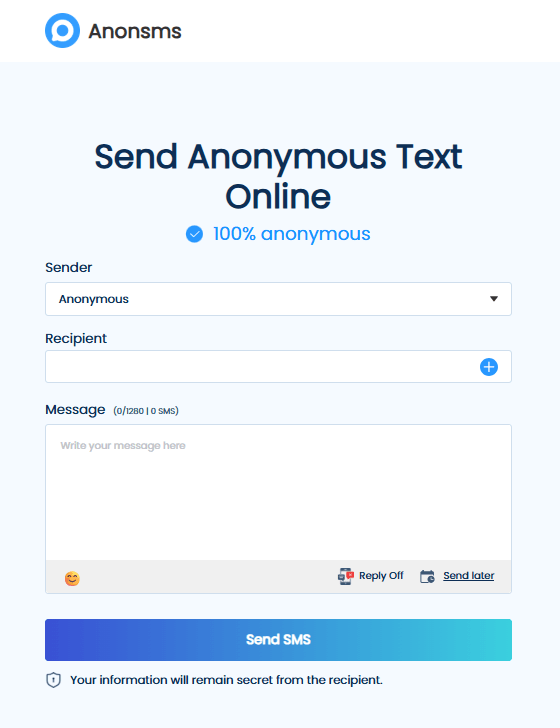
- Step 3: Hit send and your message is delivered without showing your identity.

Conclusion
Speaking up about poor service doesn’t make you difficult. It makes you helpful. When you share clear, factual feedback, you give a business the chance to improve and protect other customers from the same experience.
Learning how to report a bad employee anonymously allows you to raise concerns without confrontation, stress, or fear of backlash. With a simple text sent through Anonsms.com, your message reaches the right place quickly and privately. You’re not just complaining. You’re contributing to better service and accountability. Help your favorite local business get better. Send your anonymous feedback now with Anonsms.




 English
  German
  Spanish
  Italian
  Turkish
  French
  Russian
  Portuguese
  Czech
Czech  Finnish
  Danish